😔 The Quiet Belief That You're Too Much—or Not Enough
You know it logically—of course you're worthy of love. People say it all the time. Maybe you've even said it to others. But deep down, there's a part of you that quietly whispers:
“Not me.”
“Not with all I feel.”
“Not with how messy I am.”
“Not with this illness, this diagnosis, this past.”
“Not when I can’t even like myself.”
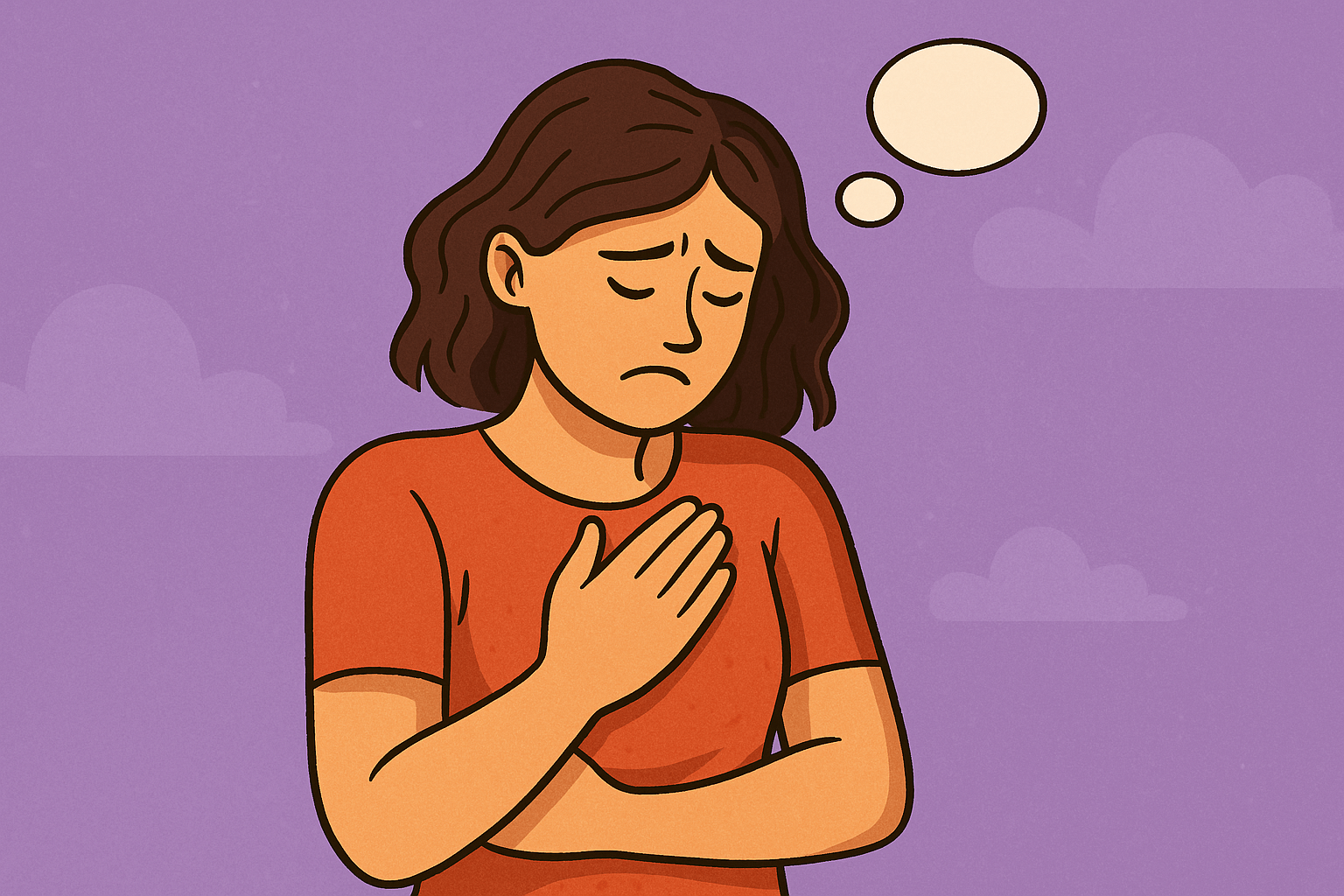
This is the experience of feeling emotionally unlovable.
And it doesn’t mean you’re broken. It means you’ve been hurt, likely deeply and repeatedly, in moments when you needed love the most.
This article is for the part of you that’s convinced your emotions make you unworthy of connection. It’s about challenging the lie that you are too sensitive, too needy, too complicated, too much—or simply not enough.
Looking for online therapy? Click here.
🧠 Where the Belief Comes From
Feeling emotionally unlovable doesn’t start in a vacuum. It usually takes root early, through repeated experiences that send the message:
“Your feelings are too big.”
“Your needs are a burden.”
“You’re lovable only when you’re easy to handle.”
Some common origins include:
🧸 Childhood Emotional Neglect
Maybe no one ever mirrored your feelings, or your sadness was met with punishment or silence. You may have learned to perform happiness just to stay safe.
🧱 Trauma and Rejection
When trust is broken—by caregivers, partners, or friends—it can create internal narratives of worthlessness. Especially when emotional needs are dismissed or punished.
🧬 Chronic Illness and Mental Health Stigma
Living with MS, depression, anxiety, or any “invisible” condition often leads people to believe their struggles make them hard to love—or that they have to be okay all the time to be accepted.
🤐 Emotional Masking and Perfectionism
If you’ve spent years hiding your true self just to be accepted, you may no longer believe the real you is worthy of connection.
These aren’t just stories—they’re survival adaptations. But they come with a cost: the deep ache of believing you're fundamentally unlovable.
❌ The Lie: “If I Were Different, I’d Be Loved”
This belief is so sneaky because it hides in things like:
- Over-apologizing for having emotions
- Believing love must be earned
- Minimizing your own pain
- Thinking, “They’d leave if they really knew me”
But here’s the truth: you are not unlovable. You were unmet.
And being unmet is not a reflection of your worth—it’s a reflection of someone else’s limitations.
❤️🩹 Step 1: Call Out the Shame Voice
Shame says:
- “You’re too much.”
- “You ruin relationships.”
- “Nobody will want you like this.”
That voice is not your truth. It’s internalized fear. And the first step toward healing is learning to recognize when it’s talking.
Try saying:
“This is my shame voice, not my true voice.”
“These thoughts are old survival scripts. I don’t have to believe them now.”
Just identifying the lie is an act of liberation.
🪞 Step 2: Ask Where You Learned It
You weren't born feeling unlovable. You were taught. Reflect on:
- Who first made you feel like your feelings were too much?
- What relationship patterns reinforced this belief?
- Were you expected to be the strong one? The quiet one? The happy one?
This isn’t about blame—it’s about tracing the wound to understand it.
Understanding the root makes it easier to stop watering the weed.
🧬 Step 3: See Emotional Depth as a Gift (Not a Flaw)
If you’ve been told you're “too emotional,” “too intense,” or “too sensitive,” try this reframe:
- Your sensitivity is data—you pick up on what others miss
- Your emotional intensity is aliveness
- Your vulnerability is strength, not weakness
- Your inner world is not something to tame—it’s something to honor
You're not “too much.” You're rich with feeling. And that's a form of intelligence.
🫂 Step 4: Let Safe People In (Even Just a Little)
The antidote to feeling unlovable isn’t just telling yourself affirmations—it’s experiencing safe connection.
Let someone see:
- Your truth, even if it’s awkward
- Your tears, even if you usually hide them
- Your uncertainty, even if you feel ashamed
Start small. Test the waters. Find people who:
- Stay soft when you’re struggling
- Don’t need you to be “fine” to feel close
- Validate your emotions, even when they don’t fully understand
You don’t need everyone to love you. You just need a few people who do so gently and consistently.
🧱 Step 5: Let Go of the Armor That Keeps Love Out
If you've been hurt before, you may carry emotional armor:
- Defensiveness
- Numbing out
- Over-functioning
- Emotional walls
- Preemptively withdrawing
These are protection strategies. And they’ve served you. But now they may be blocking the very thing you long for.
Try saying:
“I can put this armor down for a moment. I am safe enough to be seen here.”
Vulnerability is risky. But it’s also how love gets in.
🔁 Step 6: Redefine What It Means to Be Lovable
The world says:
- Be productive
- Be happy
- Be easy to deal with
But real love—the kind that nourishes and sustains—loves the whole person, not just the pleasant parts.
You are lovable when:
- You’re tired
- You’re grieving
- You’re angry
- You’re in pain
- You’re honest about how hard it is
You are lovable as-is. No performance required.
🪷 Step 7: Offer Yourself the Love You Were Missing
If you feel unlovable, chances are, there’s a younger version of you still waiting to be held.
What did you need to hear back then?
What would love have sounded like in that moment?
Try:
- Writing a letter to your past self
- Putting your hand on your heart when the pain shows up
- Saying aloud: “You are lovable, even in this.”
It may feel awkward at first. But self-compassion is a practice—and every act counts.
🛠️ Step 8: Deconstruct the Belief Over Time
Healing isn’t about flipping a switch. It’s about challenging the belief, again and again, with truth.
When the thought appears—“I’m unlovable”—ask:
- What evidence do I have for that?
- What if that belief is protecting me from disappointment?
- What would I say to a friend who felt this way?
This is how you retrain your brain to reach for truth instead of shame.
🌱 Step 9: Grieve the Connections That Couldn’t Love You Fully
Sometimes, you weren’t the problem. You were just asking someone to meet you at a depth they couldn’t reach.
Grieving that can bring healing. Letting go of:
- Parents who couldn’t offer emotional safety
- Partners who asked you to dim your truth
- Friends who only stayed for the good vibes
You’re allowed to miss them. You’re allowed to mourn what wasn’t possible.
But you're also allowed to choose love that doesn’t ask you to shrink.
✨ Step 10: Let Yourself Be Loved Without Earning It
This is the hardest one for many people.
Try receiving love:
- Without apologizing for needing it
- Without rushing to give something back
- Without performing positivity
Let love land.
You’re not unlovable. You’re just healing. And love isn’t a prize—it’s your birthright.
🧩 Final Words: The Truth Beneath the Lie
The feeling of being emotionally unlovable is not a personal truth—it’s a wound.
But you can challenge it. You can unlearn the belief. You can build new reference points—relationships and rituals that remind you:
You are not too much.
You are not too broken.
You are not unworthy.
You are human. Tender. Complex. And lovable.
Especially in your pain. Especially in your truth.
Especially in the moments you forget that you are.
Looking for online therapy? Click here.
📚 References and Resources
Brown, Brené. (2012). Daring Greatly: How the Courage to Be Vulnerable Transforms the Way We Live, Love, Parent, and Lead. Gotham Books.
Neff, Kristin. (2011). Self-Compassion: The Proven Power of Being Kind to Yourself. William Morrow.
Maté, Gabor. (2022). The Myth of Normal: Trauma, Illness, and Healing in a Toxic Culture. Avery Publishing.
Price, Devon. (2021). Laziness Does Not Exist. Atria Books.
Linehan, Marsha. (2015). DBT® Skills Training Manual. Guilford Press.
National Multiple Sclerosis Society. (n.d.). Mental Health and Emotional Wellbeing. Retrieved from https://www.nationalmssociety.org
Mental Health America. (n.d.). Understanding Emotional Health. Retrieved from https://mhanational.org
The Mighty. (n.d.). Real-Life Stories About Emotional Healing. Retrieved from https://www.themighty.com