
Reclaiming Joy When It Feels Out of Reach
Introduction
Living with a chronic illness like Multiple Sclerosis (MS) can make joy feel like a distant memory. When you’re exhausted, in pain, or dealing with emotional burnout, happiness might seem unreachable — like a song you once knew the words to but can’t quite hum anymore.
But joy is not gone.
It’s not lost forever.
It’s just hiding — waiting for you to reclaim it in new ways.
This article is for the days when joy feels like too much to ask. For the moments when you wonder, “Will I ever feel light again?” The answer is yes — but it might come softly, quietly, and in ways you never expected.
Looking for online therapy? Click here.
🧠 Why Joy Can Feel So Far Away with MS
Joy is not just an emotion — it’s a state of openness. But MS often closes doors, both physically and emotionally:
- Fatigue limits energy to do joyful things
- Pain overshadows simple pleasures
- Depression and anxiety dull positive emotions
- Grief over lost abilities clouds the present
- Uncertainty about the future creates emotional numbness
When you're in survival mode, joy doesn’t feel like a priority — it feels like a luxury. And that’s okay.
But you deserve joy.
Even if you’re struggling.
Even if things are hard.
Even if nothing feels okay right now.
💡 What Joy Looks Like Now Might Be Different — and That’s Okay
Before MS, maybe joy looked like:
- Dancing all night
- Spontaneous travel
- Long hikes
- Laughing with friends over brunch
After MS, maybe joy now looks like:
- Sitting in the sun with a good book
- Watching birds outside your window
- Creating art with your hands
- Laughing softly at a meme
- Having one meaningful conversation
Joy doesn't have to be loud to be real.
Sometimes, it’s a whisper. A flicker. A breath.
🛑 The Myth of “Toxic Positivity”
Let’s be clear:
This is not an article about forcing yourself to “just be grateful” or slapping on a fake smile.
Toxic positivity sounds like:
- “At least it’s not worse.”
- “Everything happens for a reason.”
- “You just need to stay positive.”
That’s not joy — that’s denial.
True joy comes with your pain, not instead of it.
You can feel frustrated and hopeful.
You can cry and laugh in the same day.
You can grieve and grow.
🧭 Step 1: Redefine What Joy Means to You Now

Start here:
“What does joy look like for me, with the life I have now?”
Try not to compare it to the past or to others’ highlight reels on social media. Your joy is allowed to look different.
Maybe it's:
- A moment of relief from pain
- A small success like walking farther today
- A cozy routine that brings peace
- Feeling understood by someone
- Laughing at a silly TikTok while in bed
Write down a list of small joys that still feel possible. Keep it somewhere visible.
✍️ Step 2: Journal the Joy You’ve Already Had
Joy often slips by unnoticed. Here’s a powerful prompt:
“What are 5 joyful moments I’ve had in the past month — no matter how small?”
You might be surprised at what comes up:
- A comforting cup of tea
- A kind comment on your post
- A moment when your symptoms eased
- A funny conversation with your pet
- A memory that made you smile
Joy leaves breadcrumbs. Follow them.
🎨 Step 3: Engage Your Senses
When you're overwhelmed mentally, go back to the body. Joy is often felt through the senses.
Try:
- Touch: Soft blankets, warm baths, a hug
- Sight: Nature scenes, favorite colors, calming lights
- Sound: Music, laughter, birdsong
- Smell: Candles, essential oils, fresh sheets
- Taste: Your favorite snack, a new recipe, herbal tea
Sensory joy is immediate, grounding, and healing.
🎧 Step 4: Create a Joy Playlist (Even If You’re Crying)
Music has a direct line to emotion. Create a playlist called:
🎵 “Joy, Come Back to Me”
Include:
- Songs that make you want to move
- Songs from childhood
- Songs with empowering lyrics
- Instrumentals that soothe
Even if you cry while listening, that's okay — it means you're opening up again.
🤗 Step 5: Let People In (Even Just a Little)
Isolation is joy’s enemy. And MS often isolates — physically, emotionally, socially.
You don’t need a big social circle, but connection is key. Try:
- Texting one person a day
- Joining an MS support group (online or local)
- Talking honestly with a friend
- Asking for a small favor or check-in
Letting someone witness your journey — without fixing it — is a form of joy.
🌻 Step 6: Start a "Joy Practice"
Just like gratitude or mindfulness, joy can be a practice.
Try:
- A Joy Jar: Write down one joyful thing each day and place it in a jar
- A Joy Sketchbook: Doodle what made you smile
- A Joy Photo Album: Save pictures of joyful memories or moments
Some days, the practice might feel silly. But over time, it builds emotional muscle — a reminder that joy is possible again.
😔 What If You Feel Nothing?
Some days, you won’t feel joy.
Some days, even trying feels too hard.
That’s part of the journey too.
In those moments:
- Be gentle with yourself
- Don’t force anything
- Focus on comfort, not joy
- Say: “Right now, I’m surviving — and that’s enough.”
Remember, numbness isn’t failure. It’s often your body protecting you. Trust that joy will return when it’s safe again.
✨ Joy in the “In-Between” Moments
You don’t have to wait for a “good MS day” to feel joy.
Look for it in:
- That first sip of coffee
- The moment you crawl into bed
- The stretch of light in the afternoon
- A new episode of your favorite show
- A stranger’s smile
Joy hides in ordinary things. You don’t have to chase it — you can notice it.
🖼️ Try This: A “Joy Vision Board”

Create a digital or physical collage of:
- People who make you laugh
- Colors that bring calm
- Places that feel peaceful
- Quotes that make you feel alive
Hang it somewhere visible — a reminder that joy is not gone, just waiting to be invited back in.
💬 Real Quotes from the MS Community
“I used to think joy had to be big. Now I find it in the quiet. A good book. A friend checking in. That’s real joy.”
— Ana, 39
“Laughter is my medicine. It doesn’t cure MS, but it keeps me going.”
— James, 47
“I cried for weeks after my diagnosis. Then one day, I heard a song I loved and I sang for the first time in months. That was my turning point.”
— Layla, 29
📘 Affirmations for Reclaiming Joy
Say them out loud or write them down:
- “Joy is still available to me.”
- “I deserve moments of light.”
- “Even in struggle, I am worthy of happiness.”
- “Small joys are still real joys.”
- “My illness does not define my ability to feel joy.”
🌅 Final Thoughts: Joy Is Not a Destination — It’s a Practice
You don’t have to “fix” your life to feel joy.
You don’t have to wait for the pain to stop.
You just have to be open — even a little.
Joy doesn’t erase your struggle — it coexists with it.
It reminds you of who you are beyond the diagnosis.
It helps you come back to yourself — again and again.
So today, ask yourself gently:
“What’s one thing I can do to let a little joy in?”
Then do that.
And tomorrow, do it again.
Not because you “should” — but because you’re worth it.
Looking for online therapy? Click here.
Related Posts
-

Mindful Transitions Between Rest and Action
Struggling to shift between rest and activity without guilt or overwhelm? This guide offers gentle, mindful strategies to make transitions feel more natural, intentional, and supportive of your nervous system.
-

Redefining Energy Management as Emotional Self-Care
Energy isn’t just physical—it’s emotional. Learn how redefining energy management as emotional self-care can help you protect your peace, support your nervous system, and live more in tune with your true needs.
-
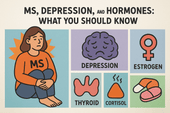
MS, Depression, and Hormones: What You Should Know
MS-related depression isn’t always just emotional—it can be hormonal. Discover how thyroid, sex, and stress hormones influence mood in MS, why women may feel worse during PMS or menopause, and what signs to look for when hormones may be driving emotional instability.
