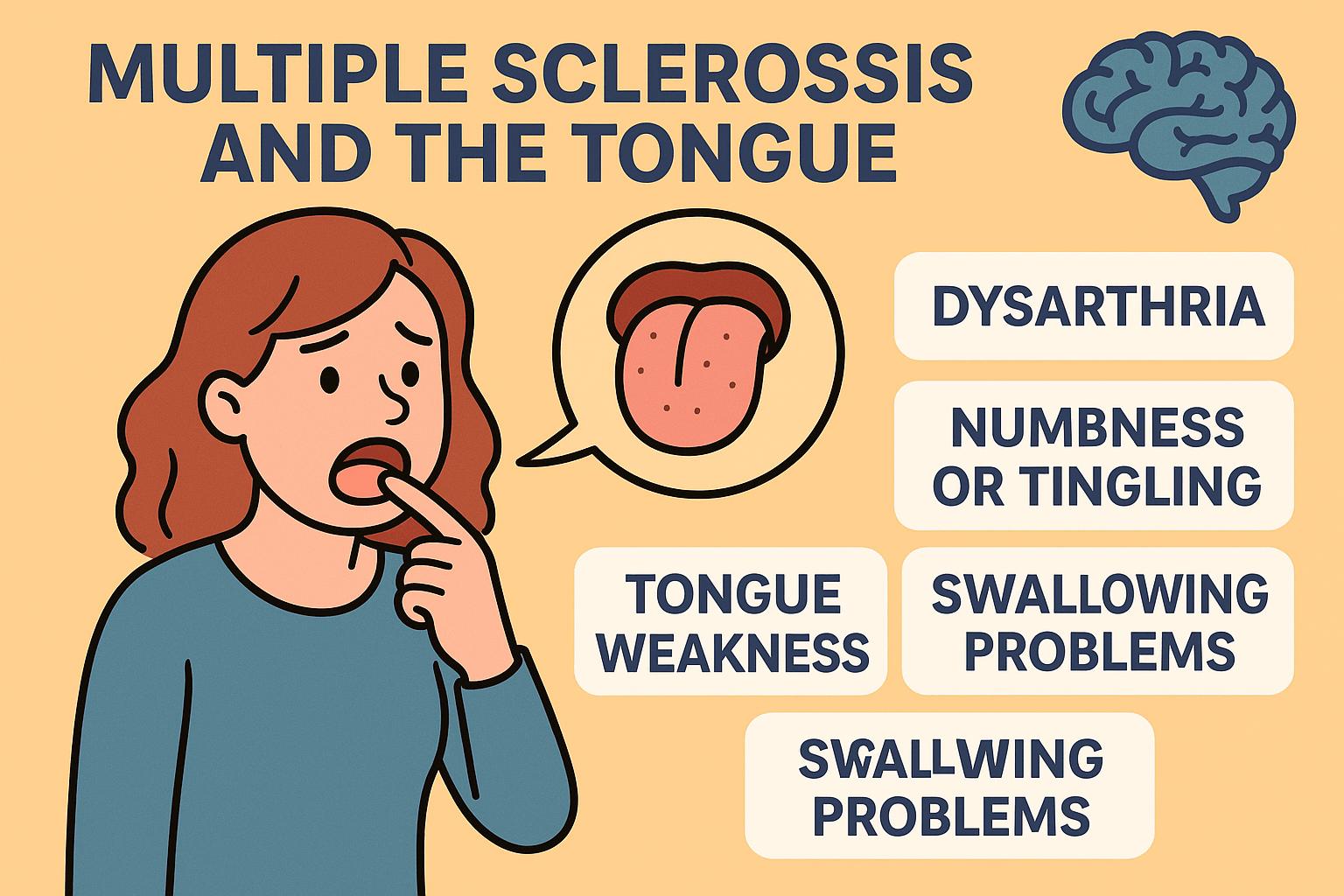
Multiple sclerosis can affect tongue sensation and tongue-related functions when MS lesions disrupt central nervous-system pathways involved in sensation, movement, speech, taste or swallowing. Possible symptoms include tongue numbness or tingling, altered taste, a heavy or poorly coordinated tongue, slurred speech and swallowing difficulty.
There is no formal diagnosis called “MS tongue,” and a tongue symptom by itself does not mean you have MS. Dental problems, medication effects, migraine, nutritional deficiencies, infection, allergy, stroke and other neurological conditions can produce similar symptoms.
If tongue numbness, facial drooping or speech difficulty starts suddenly—especially with one-sided weakness, severe headache, confusion or trouble walking—seek emergency care. Stroke and other urgent conditions should not be assumed to be MS.
What are multiple sclerosis tongue symptoms?
People with MS may report:
- Numbness or reduced sensation in the tongue
- Tingling, pins and needles, burning or other unusual sensations
- A tongue that feels heavy, weak or difficult to coordinate
- Slurred, slow or less precise speech
- Changes in taste or reduced taste perception
- Difficulty moving food around the mouth
- Coughing, choking or difficulty swallowing
These symptoms arise from the nervous system pathways controlling the mouth and tongue rather than from MS directly damaging tongue tissue.
Can MS make your tongue numb or tingly?
Yes. Sensory disturbances are common in MS, and altered sensation can involve the face or mouth. A numb or tingling tongue is possible when sensory pathways are affected, but it is not specific to MS.
Other causes can include dental procedures, vitamin B12 deficiency, migraine aura, medication reactions, oral infection, cranial-nerve disorders and other neurological conditions. New or unexplained symptoms should be assessed rather than self-diagnosed.
Can MS cause a heavy tongue or slurred speech?
MS can cause dysarthria, a motor-speech disorder. Speech may sound slurred, slow, strained, nasal or less coordinated. The problem may involve the tongue, lips, jaw, breathing and voice together rather than the tongue alone.
A speech-language pathologist can evaluate which part of the speech system is affected and suggest strategies to improve intelligibility and reduce speaking fatigue.
Can MS affect your sense of taste?
Yes, taste dysfunction has been documented in people with MS. A 2025 systematic review and meta-analysis of nine studies estimated gustatory dysfunction in roughly 16% of people with MS, although estimates varied considerably between studies and testing methods.
Taste changes still have many possible causes. Smell disorders, medications, oral and dental disease, viral illness, smoking and nutritional problems can all change flavor perception.
Can MS cause swallowing problems?
MS can cause dysphagia, or difficulty swallowing. Warning signs include coughing during meals, food feeling stuck, a wet or gurgly voice after swallowing, repeated choking, taking unusually long to eat, unexplained weight loss or recurrent chest infections.
Swallowing difficulty deserves professional assessment because food or liquid can enter the airway without always causing obvious choking. A speech-language pathologist may recommend a clinical swallowing evaluation or an instrumental study.
What else can cause tongue symptoms?
- Dental work, tooth or gum problems
- Vitamin B12 or other nutritional deficiencies
- Medication side effects
- Allergic reactions or true tongue swelling
- Migraine
- Stroke or transient ischemic attack
- Peripheral or cranial nerve disorders
- Infections or inflammatory oral conditions
- Burning mouth syndrome
When should you contact your MS team?
Contact your clinician when a tongue, speech or swallowing symptom is new, persists, is clearly worsening, or interferes with eating, drinking or communication. A persistent new neurological symptom may need assessment for an MS relapse or another cause.
If symptoms appear only when you are overheated, ill or exhausted and improve as the trigger resolves, they may represent temporary worsening of an old symptom rather than new inflammatory activity. Your MS team can help distinguish the possibilities.
What can help MS-related tongue symptoms?
Treatment depends on the cause rather than the label “MS tongue.” Depending on the problem, care may include speech therapy, swallowing rehabilitation, professionally recommended food-texture changes, medication review, treatment of a nutritional deficiency, dental care or treatment of another neurological or oral condition.
There is no supplement, mouth exercise or home remedy proven to treat every tongue symptom in MS.
Frequently asked questions
Is tongue numbness an early sign of MS?
It can occur as a sensory symptom, but tongue numbness is too nonspecific to diagnose MS. Persistent unexplained numbness requires a clinical evaluation.
Can MS make your tongue feel swollen?
Altered sensation or poor coordination can make the tongue feel heavy or enlarged. True visible swelling is different. Rapid tongue swelling, hives or breathing difficulty can signal a severe allergic reaction and requires emergency care.
Can MS cause burning tongue?
Neuropathic sensory symptoms can cause burning or unusual oral sensations, but burning mouth has several other causes. Persistent burning should be evaluated instead of automatically attributed to MS.
Can MS affect taste without tongue numbness?
Yes. Taste impairment has been reported in MS even when other facial sensory symptoms are absent. Medication, smell and oral-health causes still need consideration.
Can tongue symptoms be an MS relapse?
A new neurological symptom that persists may be part of a relapse, but tongue symptoms have many alternatives. Contact your MS clinician if the symptom is new or lasting; seek emergency care for sudden stroke-like symptoms.