
How to Build a Daily Supplement Routine for MS Wellness
Introduction
Managing Multiple Sclerosis (MS) is complex, but a targeted supplement routine—chosen wisely—can help support immune balance, nerve health, symptom relief, and overall wellbeing. This guide empowers you to build a daily supplement plan tailored to your needs, backed by science and best practices.
Want supplements for people with MS? Click here.
🌿 Why Supplements Matter in MS Wellness
MS is a chronic autoimmune disease where the immune system attacks the myelin sheath around nerve fibers. Factors that influence MS health include:
- Chronic inflammation
- Oxidative stress
- Nutrient deficiencies
- Nervous system damage
- Immune system imbalance
While prescription medications (DMTs) are essential, controlled supplementation can complement treatment by:
- Modulating immune response
- Reducing inflammation
- Supporting nerve repair
- Enhancing energy, mood, and brain function
- Filling nutrient gaps from diet or lifestyle
✅ Step 1: Assess Your Needs & Baseline
Before starting, consider:
A. Current Symptom Profile
- Relapse rate or MRI activity
- Fatigue and energy levels
- Cognitive issues (e.g., brain fog)
- Muscle symptoms: spasms, cramps, pain
- Mood: anxiety, depression, stress
B. Diet, Lifestyle & Testing
- Eating habits (whole food vs processed)
- Sun exposure and vitamin D levels
- Lab tests to check levels of: Vitamin D, B12, Magnesium, etc.
C. Medical Context
- Disease-modifying therapy (DMT) status
- Other medications (e.g., steroids, antidepressants, seizure meds)
- Comorbidities (kidney, liver, digestive issues)
🧠 Step 2: Choose Core Supplements (The Foundation)
These five key supplements form the backbone of an MS-focused routine:
1. Vitamin D3

Why: Modulates immune response in MS; linked to lower relapse rates and slower progression.
Dose: 2,000–5,000 IU/day; adjust based on serum 25(OH)D test (aim for 40–70 ng/mL).
Tip: Take with a fat-containing meal; consider adding Vitamin K2 + Magnesium for synergy.
2. Omega-3 (EPA + DHA)
Why: Anti-inflammatory, brain and nerve health, mood support.
Dose: 1,000–3,000 mg combined EPA and DHA daily.
Tip: Choose molecular triglyceride forms or algal oil (vegan); third-party tested.
3. Magnesium Glycinate
Why: Supports muscle relaxation, sleep, anxiety; often deficient in MS.
Dose: 200–400 mg at evening, increase gradually if needed.
Tip: Glycinate is calming and less likely to loosen stools.
4. Curcumin (Turmeric Extract)
Why: Potent anti-inflammatory and neuroprotective.
Dose: 500–1,000 mg/day with bioavailability enhancer (e.g., black pepper).
Tip: Liposomal or micellar forms enhance absorption.
5. Lion’s Mane Mushroom
Why: Supports nerve growth factor, brain health, cognitive clarity.
Dose: 500–1,500 mg/day of dual-extracted (water + alcohol) product.
Tip: Combine with DHA and B-vitamins for cognitive synergy.
Want supplements for people with MS? Click here.
💡 Step 3: Add Secondary Support Supplements
When needed, boost your stack with targeted nutrients for specific concerns:
1. B-Complex (B6, B9, B12)

Why: Supports nerve repair, energy production, homocysteine balance.
Form: Prefer methylated B12 (methylcobalamin) and folate (L‑5‑MTHF).
Dose: Standard B-complex with B12 1–2 mg daily.
2. Alpha-Lipoic Acid (ALA)
Why: Mitochondrial energy, antioxidant protection, slowed brain atrophy in progressive MS.
Dose: 300–600 mg twice daily with meals.
3. Resveratrol
Why: Anti-inflammatory polyphenol with neuroprotective potential.
Dose: 100–250 mg/day; take with food to enhance absorption.
4. Probiotics & Prebiotics
Why: Gut-brain-immune axis support; helps with fatigue, mood, immune modulation.
Dose: Multi-strain probiotic (10–50B CFU) plus inulin/FOS or resistant starch daily.
5. Rhodiola Rosea
Why: Adaptogen to counter fatigue and stress.
Dose: 200–400 mg/day standardized to ≥3% rosavins; use earlier in the day to avoid sleep interference.
🕐 Step 4: Timing & Routine Structure
Proper timing optimizes absorption and minimizes side effects.
| Time | Supplements |
|---|---|
| Morning | Vitamin D3 + Omega-3 + Resveratrol + Probiotic (AM) |
| Midday | ALA + B-Complex + Lion’s Mane |
| Afternoon | Rhodiola (for energy/stress) |
| Evening | Magnesium Glycinate + Curcumin + Second probiotic (optional) |
- Take fat-soluble nutrients with meals.
- Separate magnesium from calcium-rich meals.
- If using 2nd probiotic, take before bedtime or between meals.
🧬 Step 5: Monitor, Adjust, and Reassess
Track progress and tweak your plan every 8–12 weeks based on:
- Symptom changes (energy, mood, focus, stiffness)
- Blood levels (Vitamin D, B12, Magnesium)
- Medication changes
- Side effects (GI upset, loose stools, fatigue)
Use a supplement journal to record timing, brand, strength, and observations.
📋 Step 6: Precautions and Interactions
- Medication interactions: e.g., omega-3 (blood thinners); curcumin / resveratrol (CYP enzymes); magnesium (antibiotics).
- Medical conditions: kidney disease—discuss magnesium; ALA caution with diabetic meds.
- Dosing caution: Avoid mega-doses unless under supervision; obtain lab tests before escalation.
🧠 Step 7: Lifestyle Integration for Synergy
Supplements are most effective when paired with healthy lifestyle habits:
🌱 Anti-Inflammatory Diet

- Plenty of greens, berries, fatty fish, herbs, spices, olive oil, nuts
- Limit refined carbs, processed foods, sugar
🌞 Sun/Exercise Routine
- Daily safe sun exposure or tanning lamp for Vitamin D
- Gentle movement—yoga, walking, swimming—helps with cognition, fatigue, mood
🧘 Stress Management
- Mindfulness, journaling, breathing, nature walk
🛌 Sleep
- Consistent schedule, screen curfews, dark/cool environment, magnesium
🔁 Step 8: Sample Weekly Routine Snapshot
Monday
- AM: D3, Omega-3, probiotic
- Midday: ALA, B-Complex, Lion’s Mane
- Afternoon: Rhodiola
- PM: Magnesium, Curcumin
Thursday (rest day)
- Similar stack minus Rhodiola or Curcumin if not needed
Sunday (self-care day)
- Additional probiotic before bed; consider green tea or L-theanine mid-afternoon
🧭 Step 9: Dealing with Special Situations
During a Relapse
- Keep D3, omega‑3, magnesium
- Add extra antioxidants (curcumin, resveratrol)
- Emphasize anti-inflammatory meals and stress reduction
When Traveling or Under Stress
- Use a supplement organizer
- Refill key elements—D3, magnesium, probiotic
When Switching DMTs or Adding Medications
- Reassess for medication interactions and adjust as needed
🧠 Final Thoughts: Your Supplement Routine as a Lifeline
Building a daily supplement routine for MS wellness is about consistency, customization, and working collaboratively with your healthcare team. With core nutrients—Vitamin D3, Omega‑3s, Magnesium, Curcumin, and Lion’s Mane—you create a healing foundation. Adding targeted boosters—ALA, Resveratrol, B‑complex, Probiotics, Rhodiola —makes it even more powerful.
When built thoughtfully and supported by lifestyle practices, your stack becomes more than pills—it’s a daily ritual of empowerment, nourishment, and holistic care. You deserve tools that help you navigate MS with hope, strength, and resilience.
Want supplements for people with MS? Click here.
📚 References
Munger KL et al. Serum Vitamin D and MS risk. JAMA. 2006.
Tamtaji OR et al. Omega-3 supplementation in MS. Nutrients. 2022.
Abbasi B et al. Magnesium effect on sleep. J Res Med Sci. 2012.
Dolati S et al. Curcumin in MS clinical parameters. Neuroimmunomodulation. 2018.
Zhang Z et al. Lion’s Mane and NGF. Int J Mol Sci. 2020.
Spain R et al. Alpha-lipoic acid in progressive MS. Neurol Neuroimmunol Neuroinflamm. 2017.
Related Posts
-

Rebuilding Energy Reserves Without Shame
-
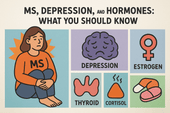
MS, Depression, and Hormones: What You Should Know
MS-related depression isn’t always just emotional—it can be hormonal. Discover how thyroid, sex, and stress hormones influence mood in MS, why women may feel worse during PMS or menopause, and what signs to look for when hormones may be driving emotional instability.
-
Can Cold Plunges Help Reduce Inflammatory Flares in MS?
Flares in multiple sclerosis (MS) are often driven by inflammation—but what if cold water could help turn down the heat? This in-depth article explores how cold plunges may help reduce flare frequency and intensity in MS by calming the immune system, lowering pro-inflammatory cytokines, and regulating the nervous system. Learn how to safely use cold exposure as part of your MS recovery routine.
