
How to Ask for Help Without Feeling Like a Burden (Especially When You Live with MS)
Introduction
Living with Multiple Sclerosis (MS) can feel like a constant balancing act — between independence and limitation, strength and vulnerability. You might need help — with meals, rides, medication, decisions, or just emotional support — but asking for it?
That’s the hard part.
You might think:
- “They have their own problems.”
- “I don’t want to seem needy.”
- “I’m already too much.”
- “I should be able to handle this.”
This article is for every MS warrior who’s ever felt guilty asking for help.
Let’s explore:
- Why it’s so hard to ask
- Where those feelings of being a “burden” come from
- How to ask for help in a way that feels empowering
- Scripts you can actually use
- And why receiving help is actually a form of connection — not weakness
Looking for online therapy? Click here.
🧠 Why Is Asking for Help So Hard?

If you struggle to ask for help, you’re not alone. It’s deeply human — and even more common in people with chronic illness like MS.
Here are a few reasons why it’s so tough:
1. 🧱 Society Glorifies Independence
We’re taught to “power through,” “be strong,” and “not rely on others.” But MS doesn’t play by those rules. You might be strong — and still need help getting dressed on some mornings.
2. 😔 Internalized Shame
You may believe that needing help means you’re failing, weak, or not pulling your weight. These beliefs often stem from past trauma or ableist messages.
3. 🧍 Fear of Rejection
You’ve probably been dismissed before — by doctors, bosses, or even loved ones. That makes asking again feel risky.
4. 🤝 You’re Empathetic
Many people with MS are incredibly caring. You don’t want to inconvenience anyone. Ironically, your kindness toward others makes you reluctant to receive kindness yourself.
But here’s the truth:
Asking for help doesn’t make you a burden.
It makes you brave.
And it allows others to be close to you.
🌪️ “I Don’t Want to Be a Burden”: Where That Feeling Comes From
That sentence — “I don’t want to be a burden” — is one of the most common phrases I hear from people with MS.
Let’s look at what it really means underneath:
| You Say... | You Might Be Feeling... |
|---|---|
| “I don’t want to be a burden.” | Shame or unworthiness |
| “They already do so much.” | Guilt for taking up space |
| “I should be able to do this.” | Internalized pressure to be ‘normal’ |
| “What if they get tired of me?” | Fear of abandonment |
Here’s what you need to know:
- Your needs are valid
- You are not “too much”
- Your presence is not a burden — it’s a gift
- Real relationships include both giving and receiving
🧭 Step 1: Redefine What It Means to Ask for Help
Let’s flip the script:
| Old Belief | New Belief |
|---|---|
| Asking = weakness | Asking = courage |
| Needing help = being a burden | Needing help = being human |
| I should do it all | I can choose interdependence |
| They’ll resent me | They might feel honored to support me |
Many people want to help — they just don’t know how unless you ask.
Letting others support you builds trust, intimacy, and connection. It actually strengthens relationships.
🛠️ Step 2: Get Clear on What You Need
Before you ask, spend a moment identifying what kind of help you need.
Is it:
- 🛒 Practical (help with groceries, rides, chores)?
- 🩺 Medical (assistance tracking meds, appointments)?
- 💬 Emotional (someone to talk to without judgment)?
- 📚 Informational (someone to research a treatment)?
- 🙌 Energetic (just being there, even silently)?
Once you're clear on what you need, it’s easier to express it with confidence.
✍️ Step 3: Use Empowering, Clear Language
You don’t need to apologize for needing help. You don’t need to over-explain or prove you’ve “earned” support.
🗣️ Try these phrases instead:
- “I could really use some support with…”
- “Would you be open to helping me with…”
- “It would mean a lot to me if you could…”
- “I’m not great at asking for help, but I’m trying.”
- “This isn’t easy for me to say, but I trust you.”
✨ You can be vulnerable and direct.
💬 Step 4: Use Scripts That Actually Feel Natural
Here are some real-life examples you can use or adapt:
🙋 Asking a Friend for Practical Help:
“Hey, I’ve been struggling with energy lately and I need to get to a doctor’s appointment next Thursday. Would you be able to give me a ride? I’d really appreciate it.”
🛒 Asking a Family Member for Ongoing Support:
“I know you have a lot going on, but I was wondering if we could create a weekly check-in. It helps me so much to feel like someone’s in this with me.”
💬 Asking for Emotional Support:

“I’m having a rough time with my MS symptoms this week. Can I vent to you for a few minutes? You don’t have to fix anything — just listening helps.”
🧠 Asking a Healthcare Provider:
“I’ve been feeling overwhelmed managing this on my own. Are there resources or support groups you could recommend?”
Looking for online therapy? Click here.
📝 Asking a Co-Worker or Boss:
“Due to my MS, I sometimes experience extreme fatigue. I’d like to talk about flexible work options so I can continue contributing fully without harming my health.”
🧡 Step 5: Accept Help Graciously (Without Guilt)
When someone says “Yes” to helping you, try saying:
- “Thank you so much — that really means a lot to me.”
- “I appreciate your support more than you know.”
- “Thanks for being someone I can rely on.”
And if you want to offer something in return (without making it transactional), you can say:
- “Let me know how I can support you sometime too.”
- “I’d love to treat you to coffee when I’m feeling better.”
But remember: You don’t owe them anything. You’re not a debt to be paid back. You’re a human being in community.
🧑🤝🧑 Step 6: Build a “Help Circle” (So It Doesn’t Fall on One Person)
One reason we feel like a burden is because we rely on just one person for everything. That’s a lot of pressure — for them and for you.
Try creating a support circle:
| Role | Example |
|---|---|
| 💬 Listener | A friend you call when overwhelmed |
| 🛒 Practical Helper | A neighbor who picks up groceries |
| 🩺 Medical Ally | A sibling who comes to appointments |
| 🎉 Distraction Buddy | Someone who makes you laugh |
| 💻 Info Researcher | A cousin who Googles treatments for you |
😌 Step 7: Show Yourself the Same Compassion You Show Others

If a loved one needed help — would you say:
“Ugh, you’re such a burden”?
Of course not.
So why say it to yourself?
You deserve care. Support. Gentleness. Community.
Not because you’re sick — but because you’re human.
🌟 Bonus: Asking for Help Isn’t Weak — It’s Brave
Repeat this:
💬 “Asking for help isn’t a flaw in my character.
It’s a strength in my self-awareness.”
It means you:
- Know your limits
- Honor your needs
- Are willing to be real
- Want to stay well
That’s something to be proud of — not ashamed of.
📖 Real Voices from the MS Community
“I used to believe that if I asked for help, people would get tired of me. But the opposite happened. My relationships got stronger.”
— Marie, 36
“I finally asked my best friend to come with me to infusions. She said she was glad I asked. I cried.”
— Jamal, 42
“MS took away my ability to do it all alone. But it gave me something better — connection.”
— Leah, 50
🌈 Final Thoughts: You’re Not a Burden. You’re a Beautiful Human Being.
You’re allowed to ask for help. You’re allowed to receive care.
You’re allowed to not be okay — and to need support anyway.
If you live with MS, asking for help doesn’t mean you’re weak.
It means you’re wise enough to protect your health and brave enough to say:
“I matter. My needs matter. And I don’t have to do this alone.”
Looking for online therapy? Click here.
Related Posts
-
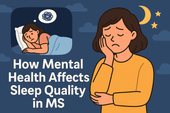
How Mental Health Affects Sleep Quality in MS: Breaking the Cycle of Fatigue and Emotional Distress
Struggling to sleep when you have MS? Discover how anxiety, depression, and neurological changes impact your rest—and what you can do to reclaim it. From CBT-I and calming supplements to lifestyle tips that support both mental health and sleep, this guide offers practical strategies for better nights.
-
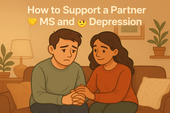
How to Support a Partner with MS and Depression
Learn how to support a partner living with MS and depression—practical tips, emotional tools, and ways to protect your own mental health too.
-
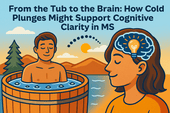
From the Tub to the Brain: How Cold Plunges Might Support Cognitive Clarity in MS
Cognitive fog is one of the most frustrating symptoms of multiple sclerosis (MS). But could cold plunges—those bracing dips into icy water—offer a surprising path to mental clarity? This article explores the emerging science behind cold exposure, brain function, and how a cold tub might help people with MS sharpen focus, lift brain fog, and reset their nervous system.
