
How Long Should You Take Supplements for MS? A Practical Guide
🌿 Why Supplements Are a Long-Term Strategy in MS
Multiple sclerosis is a chronic condition, which means many symptoms—like fatigue, inflammation, nerve pain, and nutrient deficiencies—persist over time. Supplements don’t cure MS, but they may:
- Improve symptom management
- Support brain and nerve health
- Address nutrient depletions
- Balance the immune system
- Reduce inflammation
- Improve quality of life
The key question becomes: For how long do I need to take each one?
Let’s explore.
Looking for supplements for people with MS? Click here.
⏳ There’s No One-Size-Fits-All Answer—But There Are Guidelines
How long you should take a supplement depends on:
- Your symptom profile (fatigue, spasticity, cognition, etc.)
- Lab testing (nutrient deficiencies, inflammation markers)
- Disease stage (early RRMS vs. advanced progressive MS)
- Medication use (some meds deplete specific nutrients)
- Your lifestyle and diet
Some supplements are lifelong, others are seasonal or targeted.
🧠 Long-Term or Lifelong MS Supplements
These supplements tend to be ongoing, because they fill in consistent gaps or support long-term processes like inflammation reduction or neuroprotection.
🌞 1. Vitamin D3

Why long-term?
Most people with MS have low levels of vitamin D. Deficiency is linked to worse disease activity and relapse rates.
Typical Duration:
✅ Lifelong (adjust dosage based on blood levels)
Monitor with:
25(OH)D blood test every 3–6 months
Target blood level: 50–80 ng/mL (125–200 nmol/L)
🧠 2. Omega-3 Fatty Acids (EPA/DHA)
Why long-term?
Omega-3s reduce inflammation, support brain and nerve health, and may help with depression.
Typical Duration:
✅ Lifelong
Signs you may benefit:
- Joint pain
- Brain fog
- Mood issues
- Low omega-3 index on testing
💊 3. Magnesium
Why long-term?
Supports nerve transmission, muscle relaxation, sleep, and bowel regularity.
Typical Duration:
✅ Long-term, but can reduce dose once symptoms improve
Best form: Magnesium glycinate or citrate
Monitor for: Loose stools (may indicate dose too high)
Looking for supplements for people with MS? Click here.
🔋 4. CoQ10

Why long-term?
Supports mitochondrial energy—especially useful if you experience fatigue or are on MS meds that deplete it (like statins).
Typical Duration:
✅ Long-term if fatigue is persistent
Consider reducing or cycling after 6–12 months if energy improves dramatically.
🧠 5. B-Complex Vitamins (especially B12, B6, B1)
Why long-term?
Nerve function and myelin rely heavily on B vitamins. MS medications like metformin or proton-pump inhibitors may deplete them.
Typical Duration:
✅ Lifelong for many (especially B12)
Test regularly: Serum B12 and methylmalonic acid (MMA)
Watch for: Tingling, numbness, mood swings
🔁 Supplements You May Cycle or Use Strategically
These are helpful based on specific symptoms, stress levels, or seasons. They don’t always require indefinite use.
🌿 6. Curcumin (Turmeric Extract)
Why take it?
Reduces inflammation, joint pain, and protects neurons.
Typical Duration:
🌀 Use for 3–6 months during flare-ups or pain phases
Cycle off: Every few months to assess whether you still need it
🛌 7. Melatonin
Why take it?
Improves sleep quality and circadian rhythm. Helpful in early disease stages or during stress.
Typical Duration:
🌀 Short-term (1–3 months) or as needed for sleep disturbances
Taper off slowly to avoid rebound insomnia
Looking for supplements for people with MS? Click here.
🌾 8. Adaptogens (Ashwagandha, Rhodiola, Holy Basil)
Why take them?
Support adrenal balance, reduce stress, and modulate immune response.
Typical Duration:
🌀 6–8 weeks on, then 2–4 weeks off
Ideal for: Times of high stress, seasonal change, or post-infection recovery
🧬 9. L-Carnitine or Acetyl-L-Carnitine
Why take it?
Boosts mitochondrial energy, especially for MS-related fatigue.
Typical Duration:
🌀 Use for 3–6 months during fatigue flares
Consider reducing if fatigue improves or you start another energy-support supplement (like CoQ10)
💪 10. Creatine

Why take it?
Supports muscle strength and short bursts of energy. Helpful for MS patients engaging in physical therapy or strength training.
Typical Duration:
🌀 Cycle 8–12 weeks on, 4 weeks off
📅 When Should You Reevaluate Your Supplement Plan?
You should assess your supplement stack:
📆 Every 6 months, even if symptoms are stable
🧪 After lab testing
📉 If symptoms return or new ones emerge
💊 When changing MS medications
💬 At annual neurology visits
💡 Questions to ask yourself:
- Am I still benefiting from this supplement?
- Have my symptoms improved?
- Are there new issues I want to address?
- Can I test for deficiency or excess?
🧪 How to Monitor Supplement Effectiveness
Track progress using a symptom journal or app. Monitor things like:
- Fatigue (scale 1–10)
- Sleep quality
- Pain or spasticity
- Bowel movements
- Mood or irritability
- Cognitive clarity
You can use tracking tools like:
- 📝 Journals (paper or digital)
- 📱 Apps like Bearable, MySymptoms, or CareClinic
- 📊 Blood tests for Vitamin D, B12, magnesium, omega-3 index, and CRP
📋 A Practical MS Supplement Duration Framework
| Supplement | Duration | Notes |
|---|---|---|
| Vitamin D3 | Lifelong | Test every 3–6 months |
| Omega-3 | Lifelong | Higher doses during inflammation |
| Magnesium | Long-term | Adjust for bowel tolerance |
| B12 & B-Complex | Lifelong | Essential for nerve repair |
| CoQ10 | Long-term | Especially for fatigue |
| Curcumin | 3–6 months | Use during inflammation |
| Melatonin | Short-term | Use for insomnia only |
| Adaptogens | 6–8 week cycles | For stress and fatigue |
| Creatine | 8–12 weeks | Helps mobility and strength |
| L-Carnitine | 3–6 months | Energy support during flares |
❗ What Happens If You Stop Taking Supplements Too Soon?
Stopping too early can lead to:
- Fatigue rebound (if coming off CoQ10 or magnesium)
- Sleep disturbances (after melatonin)
- Re-emerging numbness or tingling (B12 or B1)
- New flares (low vitamin D)
- Mood swings or anxiety (low magnesium or omega-3)
⚠️ Always taper off slowly and monitor how your body responds.
⚖️ Should You Ever Stop a Supplement Completely?
Yes—especially if:
- Your lab levels are optimal and symptoms resolved
- You're experiencing side effects
- The supplement is interacting with medication
- You're switching to a more targeted formula
Work with a practitioner to adjust rather than self-stopping blindly.
👩⚕️ What to Discuss with Your Doctor or Nutritionist
Ask your MS healthcare team:
- Which supplements are essential based on my labs?
- Can I stop or reduce anything I’m taking?
- Are my meds depleting key nutrients?
- How do I test for omega-3s, magnesium, B12, etc.?
- Should I rotate or cycle any supplements?
🧭 Final Takeaway: Supplements Are a Journey, Not a Quick Fix
Supplements can be powerful tools in managing MS—but they’re most effective when used:
- Consistently, but not blindly
- Based on your symptoms
- Supported by lab data
- Reassessed regularly
Think of your supplement routine like your MS itself: dynamic, personal, and ever-evolving.
With smart tracking, medical guidance, and a willingness to adjust, you can build a stack that supports you through every stage of your MS journey.
Looking for supplements for people with MS? Click here.
📚 Research Highlights
Vitamin D3 shown to reduce relapse risk and MRI lesions in MS (Ascherio et al., JAMA Neurology)
B12 deficiency associated with worsening MS symptoms and myelin loss (Neuroimmunol Neuroinflammation)
Omega-3 fatty acids linked to anti-inflammatory effects and slower progression (Multiple Sclerosis Journal)
Magnesium supports sleep, nerve health, and stress reduction (Nutrients, 2017)
Adaptogens like Ashwagandha reduce cortisol and support immune balance (Phytomedicine, 2020)
Related Posts
-
Sleep Deprivation and Emotional Dysregulation in MS
-

Healing from Emotional Flatness with Sensory Rituals
Feeling emotionally numb or disconnected? Discover how sensory rituals can gently restore pleasure, presence, and emotional resilience.
-
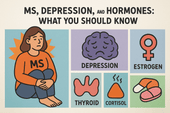
MS, Depression, and Hormones: What You Should Know
MS-related depression isn’t always just emotional—it can be hormonal. Discover how thyroid, sex, and stress hormones influence mood in MS, why women may feel worse during PMS or menopause, and what signs to look for when hormones may be driving emotional instability.
