
Can Breathwork Help Rewire the Brain After MS Damage?
🌬️ Introduction: Breathwork as a Tool for Brain Recovery in MS
Multiple Sclerosis affects the central nervous system by damaging the myelin sheath that protects nerves. This disruption in nerve signaling can cause a wide range of symptoms—from fatigue and weakness to cognitive dysfunction and emotional instability.
But here’s the hopeful part: the brain has a remarkable ability to adapt. This is known as neuroplasticity—the capacity of the brain to form new connections and pathways to compensate for damage. And one of the simplest tools that may help trigger this process? Your breath.
Breathwork is not just a relaxation technique—it has profound effects on the brain and nervous system. For people with MS, who often experience dysregulation of both, breathwork may be a powerful daily practice to reduce stress, improve focus, calm anxiety, and even aid brain repair.
Want to try Breathwork? Click here.
🧠 What Happens to the Brain in MS?

MS leads to inflammation and demyelination in the central nervous system, which disrupts communication between neurons. This damage can occur in the brain, spinal cord, or optic nerves.
Common neurological effects include:
- Cognitive dysfunction (brain fog, memory issues, attention deficits)
- Motor problems (poor coordination, spasticity, weakness)
- Emotional symptoms (depression, anxiety, irritability)
Many people report feeling “disconnected” from their own brain and body. The trauma of unpredictable flares can also create chronic nervous system stress.
But there’s hope. The human brain is not fixed. And this is where breathwork and mindfulness may step in.
🔄 Neuroplasticity: Your Brain’s Built-In Repair System

Neuroplasticity refers to the brain's ability to change and rewire itself by forming new neural connections. While this capacity may decline with age and neurological damage, it never completely disappears.
Breathwork May Support Neuroplasticity Through:
- Increasing oxygen and blood flow to the brain
- Stimulating the vagus nerve, which controls parasympathetic (calming) responses
- Regulating heart rate variability (HRV), a marker of nervous system resilience
- Lowering cortisol and chronic inflammation, which interfere with healing
- Creating a calm mental state, which supports learning and new memory formation
By creating the right internal conditions for repair—reduced inflammation, increased circulation, focused attention—breathwork becomes more than a relaxation tool. It becomes a neural fertilizer.
Want to try Breathwork? Click here.
🧘 How Breathwork Affects Brain Function
Research shows that slow, controlled breathing activates specific brain areas involved in:
- Attention and decision-making (prefrontal cortex)
- Emotion regulation (amygdala and insula)
- Memory formation (hippocampus)
- Stress and arousal (brainstem and hypothalamus)
Here’s what happens when you practice slow, conscious breathing:
- Your heart rate slows.
- Your vagus nerve activates, telling your body it's safe.
- Your stress hormones drop.
- Your brain shifts out of survival mode, and into a state where learning and repair become possible.
Over time, consistent breathwork practice may lead to structural changes in the brain, similar to those observed in long-term meditators.
🌀 The Vagus Nerve: A Direct Path Between Lungs and Brain
The vagus nerve is the body’s main communication highway between the brain and major organs. It’s also the gateway to the parasympathetic nervous system—your body’s “rest, digest, and repair” mode.
MS can interfere with vagal tone, leading to chronic sympathetic activation (fight-or-flight state). Breathwork helps retrain the vagus nerve through rhythmic, slow exhalations.
Breath Techniques That Stimulate the Vagus Nerve:
- Extended exhalation breathing (inhale 4 counts, exhale 6–8)
- Humming or chanting (activates vagal tone via vocal cords)
- Diaphragmatic (belly) breathing
- Box breathing (equal inhale, hold, exhale, hold)
By improving vagal tone, breathwork supports emotional regulation, digestion, heart rate variability, and even immune balance—all essential in MS recovery.
🧩 The Breathwork-Neuroplasticity Link in Research
Let’s look at some of the research that supports this connection:
- A 2018 study in Frontiers in Human Neuroscience found that slow, deep breathing altered brain connectivity and improved emotional regulation.
- A 2020 review in Brain Sciences showed that breath-focused meditation enhanced neuroplasticity, even in people with cognitive decline.
- Breathwork has been shown to reduce inflammatory markers like IL-6 and TNF-alpha—both of which are elevated in MS.
While breathwork won’t “heal” MS in a conventional sense, it creates the optimal internal environment for healing to occur.
😔 The Emotional Side: Trauma and MS
Living with MS is not just a physical journey—it’s often traumatic. The unpredictability of symptoms, loss of control over the body, and repeated relapses can create emotional wounds.
Trauma gets stored in the body. Breathwork offers a gentle way to access and release stored tension and fear without needing to talk or relive events.
Practices like somatic breathwork, coherent breathing, or trauma-informed pranayama are particularly supportive for people with chronic illness.
🛌 Breathwork for MS Brain Fog and Fatigue

Many people with MS report significant mental fatigue—the kind that feels like thinking through molasses.
Here’s how breathwork may help with brain fog:
- Increases oxygenation to the brain, improving alertness
- Reduces mental “noise” and distraction by anchoring attention
- Lowers stress-driven fatigue by calming the HPA axis
- Improves sleep quality, which enhances cognitive function
Simple techniques like alternate nostril breathing or 3-part breathing can be energizing and grounding without overstimulating the system.
🧪 Sample Breathwork Routine to Support Brain Healing
🌞 Morning Routine for Mental Clarity (10 min)
Box Breathing (5 min): Inhale 4 – Hold 4 – Exhale 4 – Hold 4
→ Helps regulate HRV and increase focus
Alternate Nostril Breathing (5 min):
→ Balances brain hemispheres and supports attention
🧘 Afternoon Grounding for Fatigue (5–10 min)
Diaphragmatic Breathing with Long Exhale (Inhale 4, Exhale 6–8):
→ Activates vagus nerve and calms mental fatigue
Gentle Humming or Bee Breath:
→ Relaxes the nervous system and boosts nitric oxide (a vasodilator)
🌙 Evening Routine for Neuroregeneration (10–15 min)
Coherent Breathing (5 breaths/minute)
→ Aligns heart rate with breath rhythm, enhancing neuroplasticity
Body Scan with Breath Awareness
→ Reconnects mind and body, reduces tension, promotes healing
⚠️ Important Tips for People with MS Starting Breathwork
Go slow. Over-breathing or pushing too hard can cause dizziness or anxiety.
Start small. Even 3–5 minutes a day can bring noticeable benefits.
Be gentle. Avoid forceful breathing techniques unless guided by a professional.
Practice with awareness. Focus on sensation, not performance.
Work with a trauma-informed coach if breathwork brings up emotional discomfort.
💬 Testimonials from the MS Community
🗣️ “When I started breathing slowly before bed, my sleep improved dramatically—and so did my brain fog.” – Sofia, 42, RRMS
🗣️ “Breathwork helped me feel like I had control over something again. It’s the first thing I do when I feel panicky or disconnected.” – Miguel, 38, Progressive MS
🗣️ “Even five minutes of humming breath gives me more mental clarity than coffee sometimes.” – Janelle, 50, SPMS
🎯 Final Thoughts: You Can Breathe Your Way to Better Brain Health
While there’s no one-size-fits-all fix for MS, breathwork is a uniquely powerful, free, and accessible practice that supports emotional healing, brain repair, and nervous system regulation. In the face of MS-related stress, fatigue, and cognitive symptoms, it offers a way to come back home—to your body, to your breath, and to the possibility of healing.
You don’t have to master complex routines. All you need is a few quiet minutes a day, a willingness to slow down, and the courage to begin again—one breath at a time.
Want to try Breathwork? Click here.
Related Posts
-

Finding Meaning When Life Feels Empty
Feeling disconnected or numb? Discover gentle ways to find meaning again—even in emptiness—through daily rituals, reflection, and purpose.
-

The Role of Light Therapy for Seasonal Depression and MS
Can light therapy ease seasonal depression in people with MS? Discover the science, benefits, and how to use it safely for better mood and energy.
-
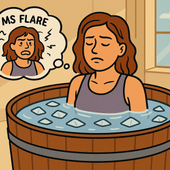
Finding Relief in the Midst of a Flare
MS flares can leave you feeling overwhelmed, exhausted, and mentally foggy. Cold water therapy is emerging as a promising tool to help reset the body and mind after a flare. This article explores how cold exposure supports recovery, calms the nervous system, and can be safely added to your daily routine.
