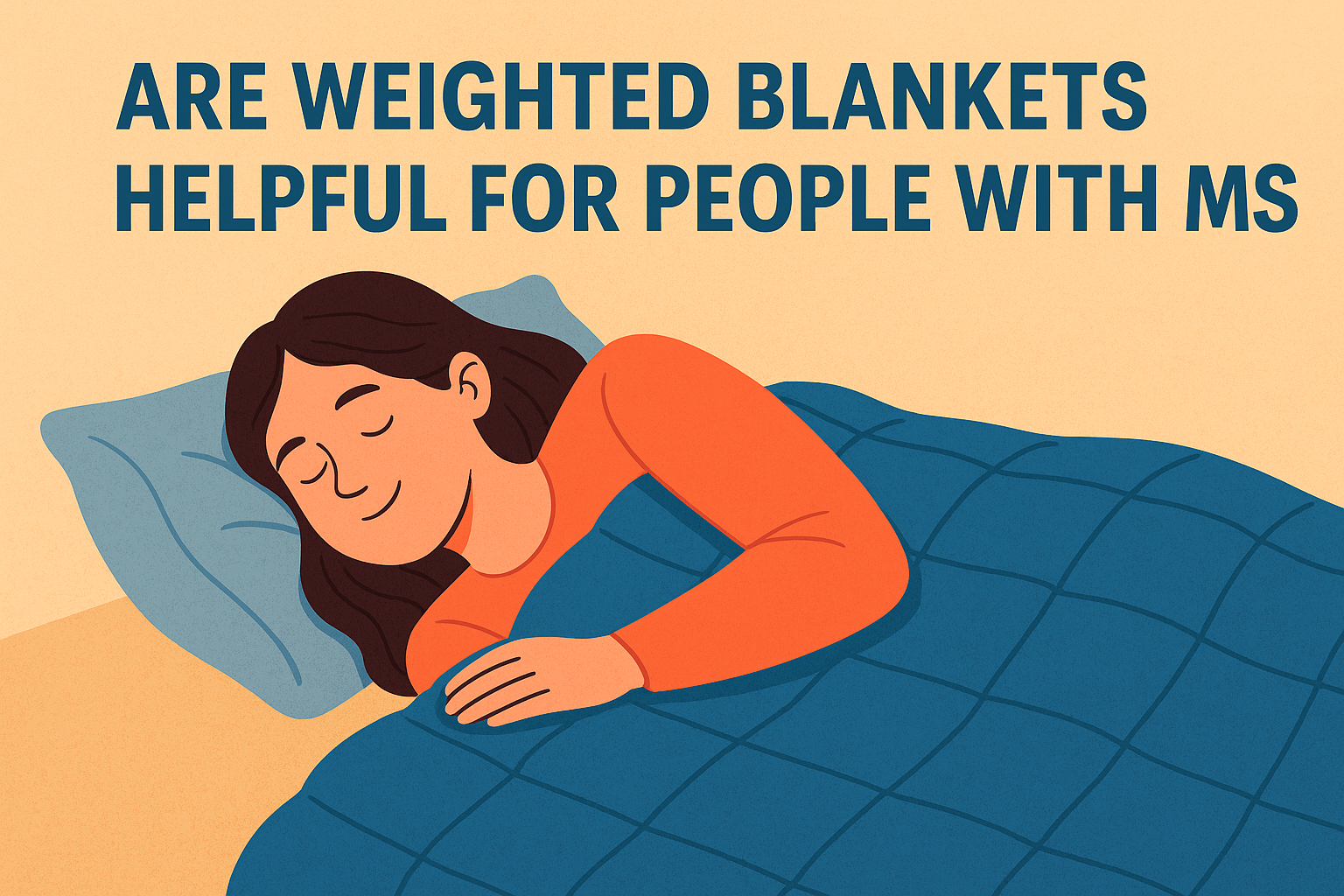
Living with Multiple Sclerosis often means navigating symptoms that go far beyond mobility. Anxiety, sensory overload, poor sleep, muscle tension, and nervous system dysregulation are common — and they can quietly erode quality of life.
Because of this, many people with MS explore non-medical comfort tools that might help them feel calmer or sleep more soundly. One option that often comes up is weighted blankets.
But are weighted blankets actually helpful for people with MS — or can they make symptoms worse?
The answer is nuanced. For some, they’re soothing. For others, they’re uncomfortable or even symptom-triggering. This guide will help you decide whether a weighted blanket is worth trying — and what to look for if you do.
What Is a Weighted Blanket?
A weighted blanket is a blanket filled with materials (often glass beads or pellets) that add gentle, evenly distributed weight. The idea is to create deep pressure stimulation, which some people find calming.
Weighted blankets are commonly used by people with:
- Anxiety
- Restlessness
- Sensory processing differences
- Sleep difficulties
For people with MS, the experience can be very individual — because MS affects sensory processing, temperature regulation, muscle tone, and mobility.
Why Weighted Blankets May Help Some People With MS
Weighted blankets don’t treat MS or change disease progression. However, they may help with certain secondary symptoms for some individuals.
Nervous system calming
Many people with MS experience a constantly “on” nervous system — feeling wired, restless, or unable to fully relax. Gentle pressure can feel grounding and may help signal safety to the body.
Some people describe this as:
- Feeling more settled at night
- Less racing thoughts before sleep
- A sense of containment or comfort
Anxiety and stress support
Anxiety is common in MS, especially when symptoms fluctuate unpredictably. For some, weighted blankets provide a non-stimulating form of comfort that feels reassuring rather than overwhelming.
Difficulty winding down at night
If sleep issues are driven more by restlessness or mental overstimulation (rather than pain or spasticity), a weighted blanket may help with the transition into rest.
When Weighted Blankets May Not Be a Good Fit for MS
Just as important as knowing when they help is knowing when they don’t.
Heat sensitivity (very common in MS)
Many weighted blankets retain heat. If warmth worsens your symptoms — fatigue, weakness, cognitive fog — a weighted blanket may be uncomfortable or counterproductive.
Spasticity or muscle stiffness
Extra weight on the body can sometimes increase muscle tightness or make it harder to move, especially overnight.
Pain or sensory sensitivity
Some people with MS experience allodynia or heightened pressure sensitivity. Even gentle weight can feel unpleasant rather than calming.
Limited strength or nighttime mobility
If turning over, repositioning, or removing heavy bedding is difficult, a weighted blanket may feel restrictive or unsafe.
How to Use a Weighted Blanket Safely If You Have MS
If you’re curious about trying one, it’s important to approach it conservatively.
Start lighter than typical recommendations
General advice often suggests 10% of body weight. Many people with MS do better with less than that.
Try partial use first
Instead of using it all night:
- Place it over your legs only
- Use it for short periods before sleep
- Remove it if you notice heat buildup or stiffness
Choose breathable materials
Cooling or breathable fabrics matter far more for MS than maximum weight.
Listen to your body
If symptoms worsen — heat, stiffness, pain, fatigue — that’s a sign it’s not the right tool for you.
What to Look for in a Weighted Blanket If You Have MS
Not all weighted blankets are created equal. A few features matter especially for people with MS:
- Breathable fabrics (cotton or cooling materials)
- Even weight distribution (to avoid pressure points)
- Multiple weight options, including lighter choices
- Soft, non-irritating textures for sensory comfort
This is why some people explore brands like Mosaic Weighted Blankets.
Mosaic is known for:
- Handcrafted construction
- Breathable cotton options
- Evenly distributed glass beads
- A wide range of sizes and weights
They don’t claim medical benefits — which is important. For the right person, their blankets can serve as a comfort aid, not a treatment.
👉 Learn more about Mosaic Weighted Blankets here:
https://livewithms.com/mosaicblanket
(This link supports LiveWithMS at no additional cost to you.)
Weighted Blankets vs Other Comfort Tools for MS
Weighted blankets are just one option. Depending on your symptoms, alternatives may be more comfortable:
- Cooling blankets or temperature-regulating bedding
- Light compression garments (for daytime use)
- Breathwork or nervous system regulation techniques
- Sensory-soothing routines before bed
There’s no single solution — and that’s okay.
What Weighted Blankets Don’t Do (Important Expectations)
To avoid disappointment, it’s important to be clear:
- ❌ They do not treat MS
- ❌ They do not reduce inflammation
- ❌ They do not cure sleep disorders
- ❌ They do not replace medical care
They are a comfort tool, not a therapy.
Bottom Line: Are Weighted Blankets Worth Trying With MS?
Weighted blankets can be helpful for some people with MS — particularly those dealing with:
- Anxiety
- Restlessness
- Difficulty winding down at night
They are less suitable for people with:
- Heat sensitivity
- Spasticity
- Pain or pressure sensitivity
If you’re curious, start gently, choose breathable materials, and pay close attention to how your body responds.
With MS, the goal isn’t to force solutions — it’s to reduce unnecessary strain and support comfort where possible.