
5-Minute Calming Rituals for Overwhelming MS Days
💙 Introduction: When MS Feels Like Too Much
Some days with multiple sclerosis (MS) are simply overwhelming.
The symptoms might flare. The fatigue might crash into you like a wave. The fear, brain fog, or pain might take over your entire body and mind. And in those moments, even thinking about how to feel better can feel impossible.
What you need isn’t a complete life overhaul. You need something simple, something doable, something kind. That’s where 5-minute calming rituals come in.
These bite-sized practices don’t promise to fix everything—but they can help you regulate your nervous system, soothe your emotions, and bring you back to yourself, even on the hardest MS days.
This article is your toolkit of calming rituals you can reach for anytime your mind or body says: “I can’t do this.”
Looking for online therapy? Click here.
🧠 Why Micro-Rituals Work for MS
MS affects not just your mobility, but your nervous system, emotions, hormones, and energy reserves. Overwhelm can come from physical symptoms and from your brain’s response to chronic stress.
Here’s why 5-minute rituals are powerful:
✅ They reduce decision fatigue.
You don’t have to think, plan, or commit to anything big.
✅ They calm your overactive nervous system.
Rituals help activate the parasympathetic (“rest and digest”) system, reducing cortisol and physical tension.
✅ They reinforce safety and self-trust.
Rituals create a sense of stability, reminding your brain and body: “We’re okay right now.”
🔄 How to Use This Article
You can:
- Try one ritual per day.
- Bookmark this list and choose intuitively based on how you feel.
- Build a “ritual menu” for flare-up days, emotional dips, or post-appointment decompression.
There’s no right or wrong—only what helps you reconnect to calm.
🕯️ 1. The Gentle Touch Ritual (for Anxiety or Panic)

What it helps with:
- Racing thoughts
- Feeling untethered
- Emotional overwhelm
How to do it:
- Place one hand on your chest, one on your belly.
- Close your eyes or soften your gaze.
- Take slow breaths—in through your nose, out through your mouth.
- Whisper or think:
“I’m here. I’m safe in this moment.”
Repeat for 5 minutes, letting the warmth of your hands signal safety to your nervous system.
📿 2. The Grounding Object Ritual (for Emotional Deregulation)

What it helps with:
- Dissociation
- Spiraling thoughts
- Feeling disconnected from your body
How to do it:
- Find a small object: a smooth stone, a bracelet, a soft cloth, or an essential oil roller.
- Hold it in your hand.
- Focus on its texture, temperature, and weight.
- Breathe and repeat:
“I’m grounded. I’m right here.”
This sensory focus brings you back into your physical body and anchors you in the now.
☕ 3. The Warm Cup Ritual (for Fatigue or Emotional Flatness)
What it helps with:
- Emotional numbness
- MS fatigue
- Feeling disconnected or dull
How to do it:
- Make a cup of something soothing—herbal tea, lemon water, or bone broth.
- Sit somewhere comfortable.
- Cup the mug with both hands and close your eyes.
- Take a slow sip.
- Say:
“This warmth is for me.”
This act of intentional sipping turns an ordinary beverage into an act of self-care.
🧘 4. The “Mini Body Scan” Ritual (for Muscle Tension or Spasticity)

What it helps with:
- Physical tightness
- Unnoticed tension
- General overwhelm
How to do it:
- Sit or lie comfortably.
- Starting at your head, slowly scan each area of your body.
- When you notice tension, gently breathe into that spot and say:
“Soften.”
or
“You can relax now.”
Work your way down in about 5 minutes, releasing judgment and allowing whatever you feel.
🎧 5. The Sound Cocoon Ritual (for Sensory Overload or Noise Sensitivity)
What it helps with:
- Overstimulation
- Sensory processing issues
- Post-crowd or post-appointment stress
How to do it:
- Put on noise-canceling headphones or earbuds.
- Play a soundscape: rain, ocean waves, ambient music.
- Sit in stillness or lie down.
- Let the sound “cocoon” you.
🧠 This shields your brain from external noise and gives your nervous system a break.
📓 6. The "Name and Normalize" Journaling Ritual (for Emotional Swells)
What it helps with:
- Big feelings
- Guilt, shame, or grief
- Feeling like a burden
How to do it:
- Open a notebook or notes app.
- Write:
“Today, I feel…”
- Name 2–3 emotions.
- Then write:
“It makes sense because…”
“And I’m allowed to feel this.”
Even two minutes of emotional validation can help regulate your system and shift out of self-blame.
🌬️ 7. The Box Breathing Ritual (for Nerve Flare or Panic)
What it helps with:
- Vagus nerve stimulation
- Calming heart rate
- MS pain or sudden fear
How to do it:
- Inhale for 4 counts
- Hold for 4 counts
- Exhale for 4 counts
- Hold for 4 counts
- Repeat for 5 minutes
This simple breathing rhythm calms the body and brain by slowing down your autonomic stress response.
Want to try Breathwork? Click here.
🧠 8. The Visual Safe Place Ritual (for Fear or Crisis)
What it helps with:
- Neurological fear loops
- MS flares or medical trauma
- Feeling frozen
How to do it:
- Close your eyes and imagine a place where you feel safe and comforted.
- Use all your senses: what do you see, hear, feel?
- Spend 3–5 minutes there in your mind.
- Say:
“I can return here whenever I need.”
This visualization technique is often used in trauma therapy to build emotional resilience.
🎨 9. The Creative Disruption Ritual (for Rumination or Helplessness)
What it helps with:
- Overthinking
- Feeling stuck or frozen
- Dull, depressed energy
How to do it:
- Grab a pen, colored pencil, or finger paint app.
- Without planning, doodle, write, or color something abstract.
- Don’t worry about making it “good.”
- Let the act of doing override the spiral of thinking.
Creativity disrupts looping thoughts and reconnects you to play, color, and possibility.
🌞 10. The Window Pause Ritual (for Brain Fog or Disconnection)
What it helps with:
- MS fog
- Feeling like you’re “not real”
- Mental fatigue
How to do it:
- Go to a window or sit outside.
- Look at something still and something moving (e.g., tree + passing clouds).
- Just observe for 5 minutes.
- Say:
“The world is still turning. I’m part of it.”
This gentle moment of visual connection gives your nervous system orientation and peace.
🧭 Building Your Personalized Calming Toolkit
Try tracking which rituals work best in different emotional states. Here's a template:
| When I feel… | I try… |
|---|---|
| Anxious and shaky | Box Breathing or Gentle Touch |
| Emotionally numb | Warm Cup or Creative Ritual |
| Disconnected or foggy | Window Pause or Body Scan |
| Angry or restless | Journaling or Safe Place |
| Overstimulated | Sound Cocoon or Grounding Object |
Over time, you’ll build your own calming map for navigating your MS overwhelm.
💬 Real-Life Testimonial
“When I’m flaring, I don’t have the energy for long meditations or movement. But placing my hand on my heart and just breathing for five minutes? That has saved me on some really dark days. These rituals are like mini lifelines.”
— Monica, diagnosed with RRMS at 29
✨ Bonus: Create a 5-Minute Ritual Box
Fill a small basket or box with calming tools:
- Essential oil roll-on
- Favorite tea bag
- Soft cloth or fidget stone
- List of affirmations
- Small journal
- Earbuds for soundscapes
This way, your calming rituals are ready and waiting when you need them most.
💙 Final Thoughts: You Don’t Need Big Solutions to Feel Better
Some MS days feel impossible. But healing doesn’t always come in the form of a new medication or perfect routine. Sometimes it comes in five soft minutes—a pause, a breath, a moment to say:
“I’m overwhelmed… and I’m still worthy of care.”
You don’t have to be perfectly calm.
You don’t have to feel 100% better.
You just have to give yourself 5 minutes of kindness—over and over.
And that’s more than enough.
Looking for online therapy? Click here.
Related Posts
-
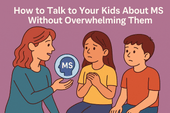
How to Talk to Your Kids About MS Without Overwhelming Them
Struggling with how to explain MS to your kids? Learn how to talk to children of all ages about multiple sclerosis with honesty, clarity, and emotional safety—without overwhelming them.
-

Medication vs Therapy: Treating MS-Related Depression Effectively
Explore whether therapy, medication, or both are best for treating MS-related depression. Understand what works, when—and why combination care is often ideal.
-
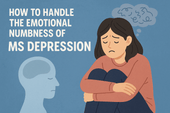
How to Handle the Emotional Numbness of MS Depression
Emotional numbness in MS depression doesn’t always look like sadness—it can feel like nothing at all. Learn why this disconnection happens, how it's tied to neuroinflammation and nervous system overload, and discover science-backed strategies to gently reconnect with your emotions.
